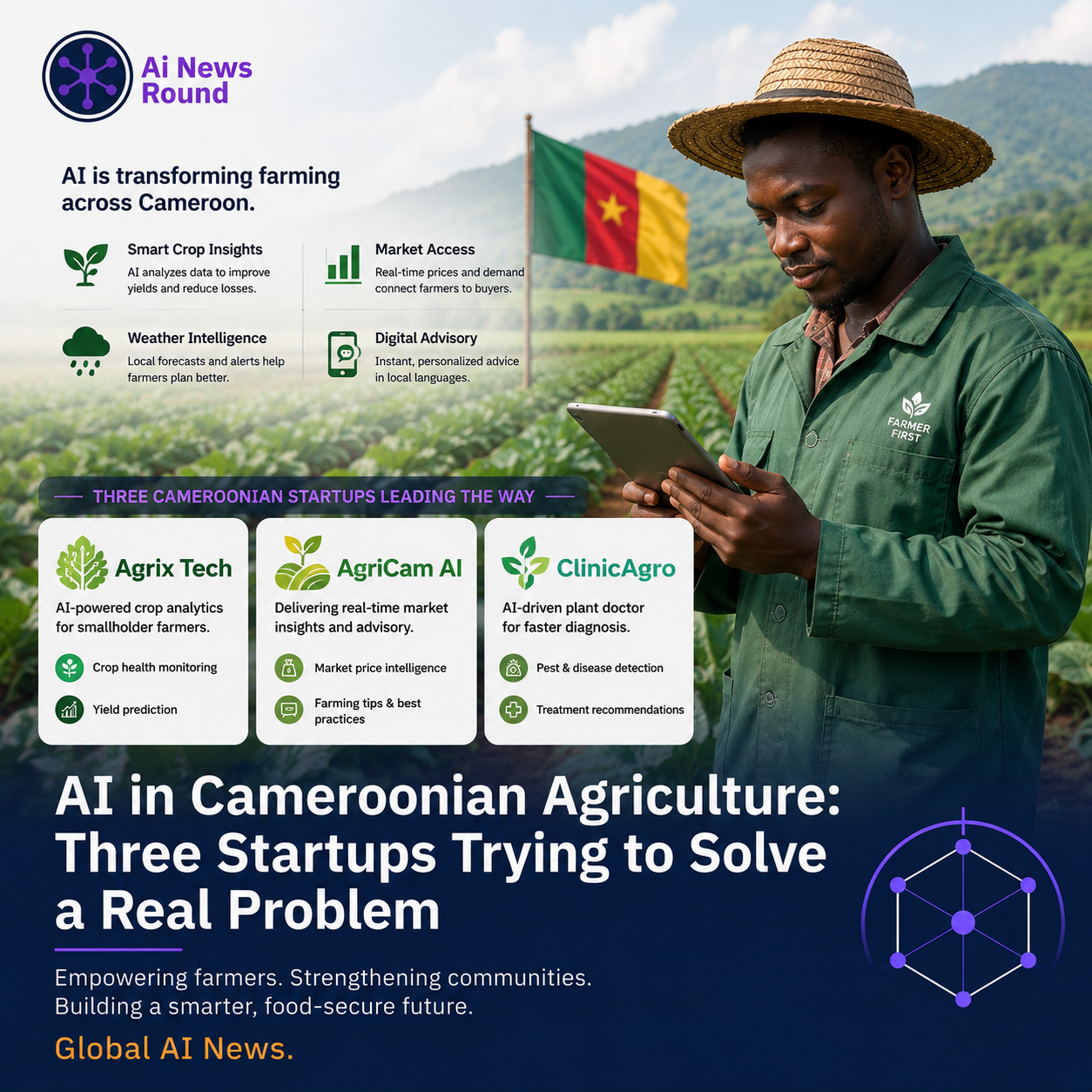
Crop disease diagnosis from a photograph is one of the better-matched applications of computer vision in agriculture: the input is cheap to capture, the classification task is well defined, and the cost of a wrong answer is bounded. Several Cameroonian companies are building on exactly that premise.
The modelling is the easy part. What separates the three teams we looked at is how each handles the gap between a working classifier and a smallholder who acts on its output.
Connectivity decides the architecture
Teams that assumed a live API call have struggled outside the major cities. The ones that shipped an on-device model, even a less accurate one, get used. That trade — accuracy for availability — is the recurring lesson across agricultural technology on the continent, and it is routinely got wrong by people building from elsewhere.
Diagnosis is not the bottleneck
A farmer who learns their crop has a fungal infection still needs the treatment to be available and affordable locally. The companies making real progress have paired the diagnostic with input supply or credit. The ones treating it as a pure software problem have high download numbers and little else.