
Mapping Topological Signatures in Attention Networks
A fundamental obstacle to deploying large language models in production environments is their propensity to generate factually incorrect or ungrounded outputs. Traditional approaches for detecting hallucinations often rely on multi-response sampling or computationally expensive consistency checks. However, new research demonstrates that hallucinations leave distinct structural traces within the model's internal attention graphs during single-pass generation.
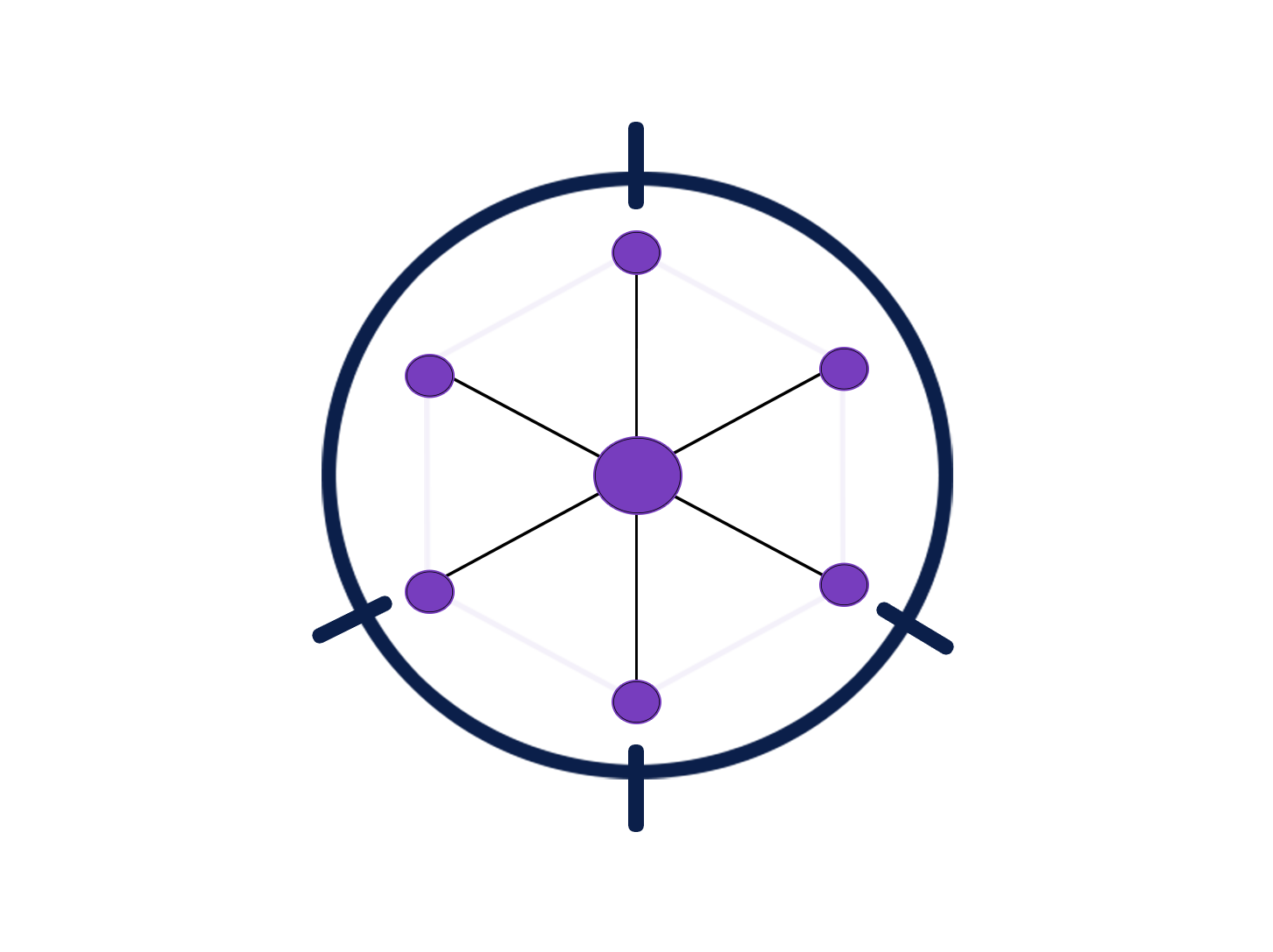
By framing the attention weights of a transformer as a weighted adjacency matrix, researchers can evaluate the topology of information flow across token sequences. This structural analysis relies on calculating Forman-Ricci curvature across attention graphs to isolate information bottlenecks and measure the efficiency of context transmission.
Impaired Context Sharing and Information Over-Squashing
The structural evaluation reveals that hallucinations strongly correlate with impaired context sharing among tokens during causal text generation. When a model begins to output non-factual text, its attention mechanism exhibits specific failure modes:
- Over-reliance on self-attention: Tokens attend predominantly to themselves rather than incorporating broader sequence context.
- Diffused context retrieval: Attention weights become dispersed across earlier tokens, failing to isolate relevant supporting facts.
- Information over-squashing: Context from numerous preceding tokens is forced through a single intermediate token bottleneck, leading to severe information loss before reaching terminal transformer layers.
Single-Pass Detection Performance
By extracting topological features from attention maps, researchers trained a simple linear probe to identify hallucinatory outputs without requiring additional forward passes or external verifiers. Across empirical evaluations, this single-pass topological method consistently outperformed standard attention-based metrics and multi-response self-consistency baselines on established benchmarks. While the exact topological signatures vary across different model architectures, the underlying phenomenon of information bottlenecks remains a consistent indicator of non-factual generation.