From Isolated Clips to Long-Form Autonomous Video Generation
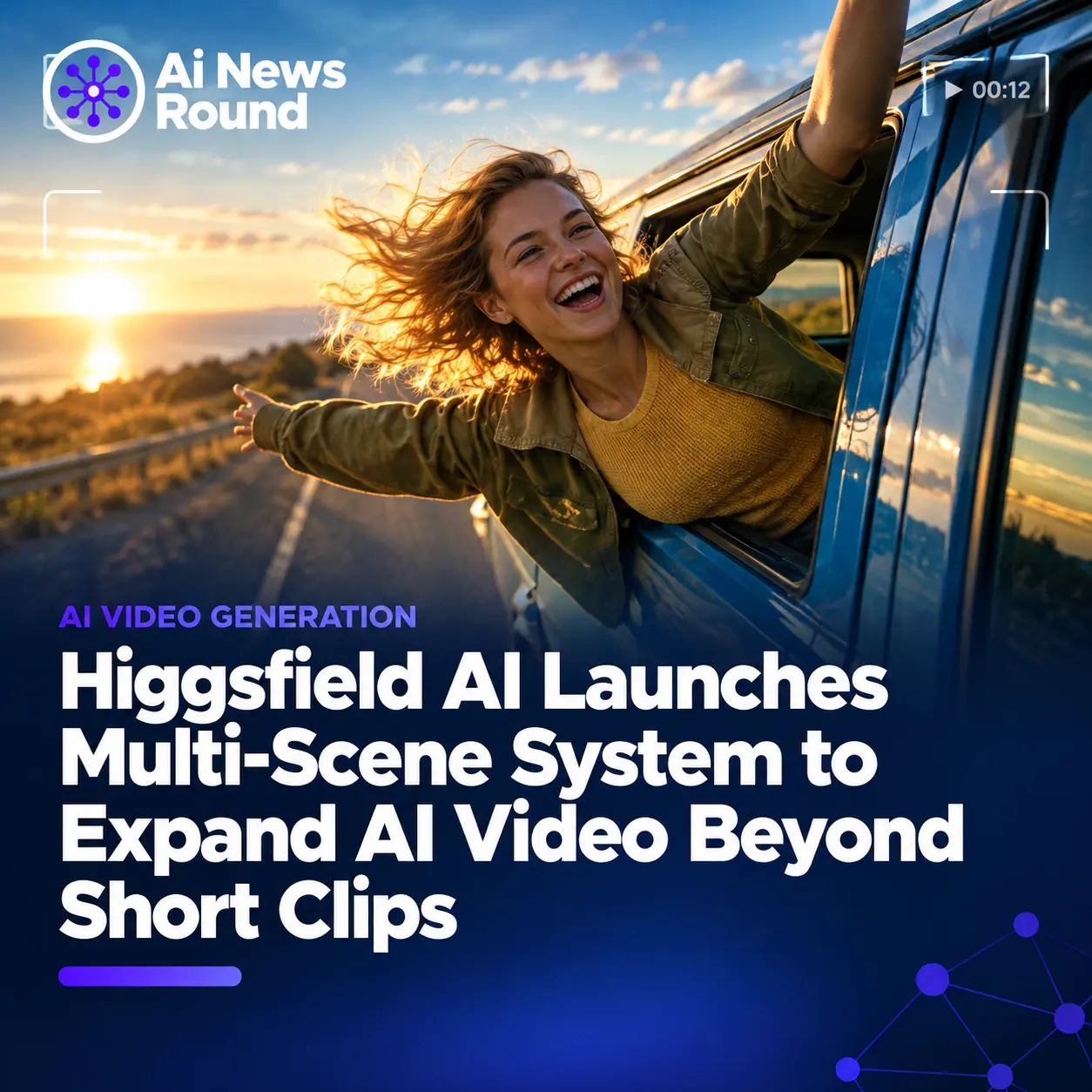
Artificial intelligence video platform Higgsfield has released a major workflow update designed to overcome the structural duration limits of generative video models. While standard generative engines typically restrict single-pass outputs to short generations ranging from 5 to 30 seconds, Higgsfield's newly updated architecture enables creators and production teams to automatically generate cohesive, multi-scene videos running well past 10 minutes.
The technological shift shifts video AI away from generating isolated visual loops and toward full-length content production. Rather than relying on a single, massive context pass—which frequently introduces visual degradation, spatial hallucination, and memory decay—Higgsfield organizes long-form projects through an orchestrated multi-scene pipeline. Using model context protocols (MCP) and integrated Supercomputer skills, the platform translates a single conversational script or prompt into a continuous, 100-plus scene storyboard complete with localized voiceover, visual style locks, and automated timeline stitching.
Architectural Mechanisms: Scene Stitching and Multi-Model Orchestration
To maintain continuity across long timelines, Higgsfield's long-video generator implements forward and backward clip extension alongside start-and-end frame anchoring. The engine allows creators to use up to 50 reference inputs—including character faces, product assets, and lighting palettes—to enforce spatial and aesthetic stability across consecutive generations.
Underneath the platform's orchestration layer sits multi-model aggregation. Rather than forcing a single underlying engine to handle every task, Higgsfield allows creators to assign different scenes to specialized underlying models—such as Cinema Studio 4.0, Seedance 2.0, WAN 2.6, Veo 3.1, or Kling 3.0—depending on whether a shot demands precise character action, environmental atmospheric effects, or native lip-synced audio generation. The system automatically aligns camera movements, lens profiles, color grades, and audio tracks before rendering the compiled long-form file.
Industry Implications for Digital Media and Monetized Channels
The ability to generate 10-minute AI videos from single-prompt workflows significantly impacts digital content creation, particularly for faceless explainer channels, educational series, and automated short-form drama productions. Long-form video remains the primary driver for audience watch time and ad monetization across major streaming platforms like YouTube.
By automating script parsing, multi-shot visual generation, audio binding, and final assembly, Higgsfield dramatically reduces the time and technical overhead historically required to piece short AI clips into coherent long-form narratives. As AI video technology matures, the focus is shifting rapidly from pure model generation speed to trajectory-level narrative continuity and long-duration scene management.
For further analysis on generative model workflows and enterprise deployment architectures, explore our coverage of Asana Slashes Browser Agent Costs 76-Fold and view our dedicated reporting under Tools & Applications.