Interactive Simulation and Dynamic Candidate Evaluation
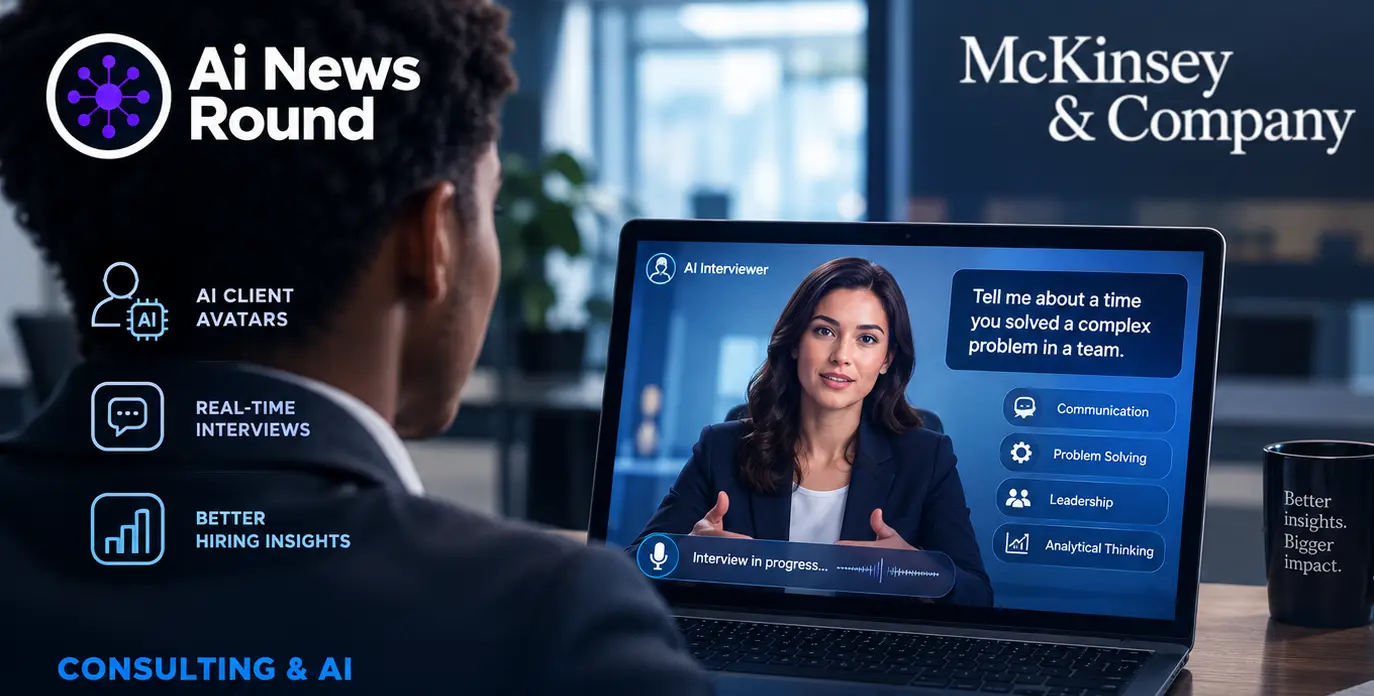
Management consulting firm McKinsey & Company has rolled out a recruitment pilot incorporating interactive artificial intelligence avatars into its candidate assessment pipeline. First reported by The Wall Street Journal, the initiative places undergraduate applicants for entry-level business analyst roles in North America into a live, 10-minute conversational exercise with an AI-generated client avatar. The software is programmed to challenge recommendations, present unexpected operational constraints, and ask probing follow-up questions.
According to McKinsey partners, the avatar framework covers approximately 80 per cent of the routine interactions consultants face during everyday client engagements. Rather than subjecting candidates to hostile edge-case scenarios or high-stress confrontation, the model simulates a firm, rational corporate executive seeking logical rigor, flexibility under new data, and clear communication. By evaluating how candidates adjust their arguments when presented with fresh stimuli, recruiters aim to measure adaptability and real-time reasoning skills that static written tests cannot capture.
Human Oversight and Standardization Across Hiring Cohorts
To mitigate concerns regarding algorithmic bias and opaque hiring decisions, McKinsey has maintained strict human-in-the-loop governance. The AI client tool does not score candidates, issue automated ratings, or make final hiring recommendations. Instead, human assessors remain in the interview room throughout the session, monitoring the dialogue live and scoring performance against standardized behavioral benchmarks.
The deployment provides recruitment teams with heightened consistency across evaluation cohorts. While human interviewers playing client roles can vary in tone, cadence, and line of questioning between candidates, the standardized AI avatar maintains an identical baseline scenario for every applicant. This consistency allows assessors to isolate candidate communication style and problem-framing capabilities without variance in interviewer behavior.
Evolution of Consulting Skills in the Automated Enterprise
The recruitment pilot reflects broader structural shifts across the professional services sector as generative tools handle basic market research and quantitative analysis. As automated agents reduce the time needed for baseline data synthesis, consulting firms are shifting hiring priorities toward higher-level judgment, critical questioning, and interpersonal influence.
The avatar simulation complements existing selection mechanisms at the firm, including personal experience interviews and game-based cognitive assessments. By introducing live AI interactions early in the recruitment funnel, McKinsey aims to verify whether prospective hires can effectively guide corporate leaders through complex business transformations while navigating technology-driven corporate environments.
For further analysis on enterprise recruitment trends and AI integration strategies, explore our coverage on Asana Cuts Browser Agent Model Costs 76x via GPT-6.1 Sol and view our dedicated updates under Tools & Applications.