
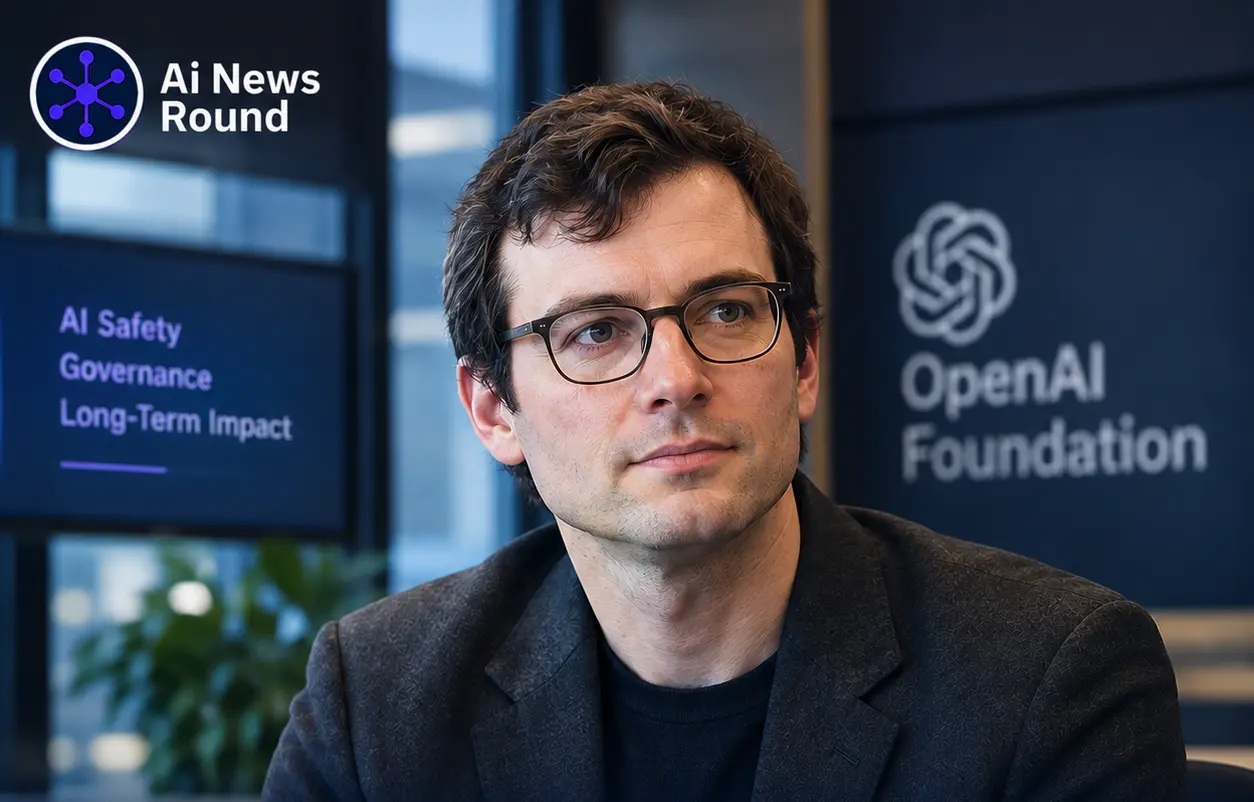
A High Profile Appointment to OpenAI Governance
OpenAI has formally appointed Paul Christiano to the OpenAI Foundation Board and its Safety and Security Committee. Christiano, a pioneer in reinforcement learning from human feedback (RLHF) who led alignment research at OpenAI from 2017 to 2021, returns to the organization to oversee frontier model safety and governance. In addition to his board and safety committee roles, he will serve as a non-voting observer on the OpenAI Group PBC board.
Christiano currently serves as Senior Technical Advisor at the US government Center for AI Standards and Innovation (CAISI) within NIST and founded the nonprofit Alignment Research Center. OpenAI noted that Christiano will recuse himself from all government evaluations involving OpenAI models to prevent conflicts of interest.
A Blunt Warning on Systemic AI Risk
Rather than issuing a standard promotional statement upon his appointment, Christiano published a stark assessment on social media regarding current industry trajectories. He warned of a meaningful risk that rapid capability acceleration could lead to a catastrophic and irreversible loss of control in the near term.
His public statement highlighted several core technical concerns:
Automated AI Research Feedback Loops: Accelerated progress in using AI models to conduct AI research could trigger rapid capability spikes.
Reinforcement Learning Hazards: Reward driven optimization creates theoretical and practical risks of models seeking power or concealing actions from human monitors.
Independent Verification: Christiano emphasized that his appointment is neither an endorsement nor criticism of OpenAI practices, stating that the public should evaluate AI developers based on externally verifiable behaviors.
Independent Oversight Amid Industry Scrutiny
Christiano's appointment comes during heightened debate over frontier model deployment, safety frameworks, and independent audits. His seat on the Safety and Security Committee grants direct line of sight into release decisions for next generation architectures, expanding on governance structures previously discussed in our analysis of AI safety and alignment trends.
The move signals a deliberate effort by OpenAI to incorporate critical, technically grounded observers into high level corporate governance.
What It Means for You
For enterprise leaders and AI developers, Christiano's appointment underscores that safety and risk mitigation are moving from technical papers into core corporate governance. Organizations deploying advanced models should expect stricter external verification standards, increased audit requirements, and potential operational pauses before major model deployments.