Productivity Spikes and Reduced Labor Obligations
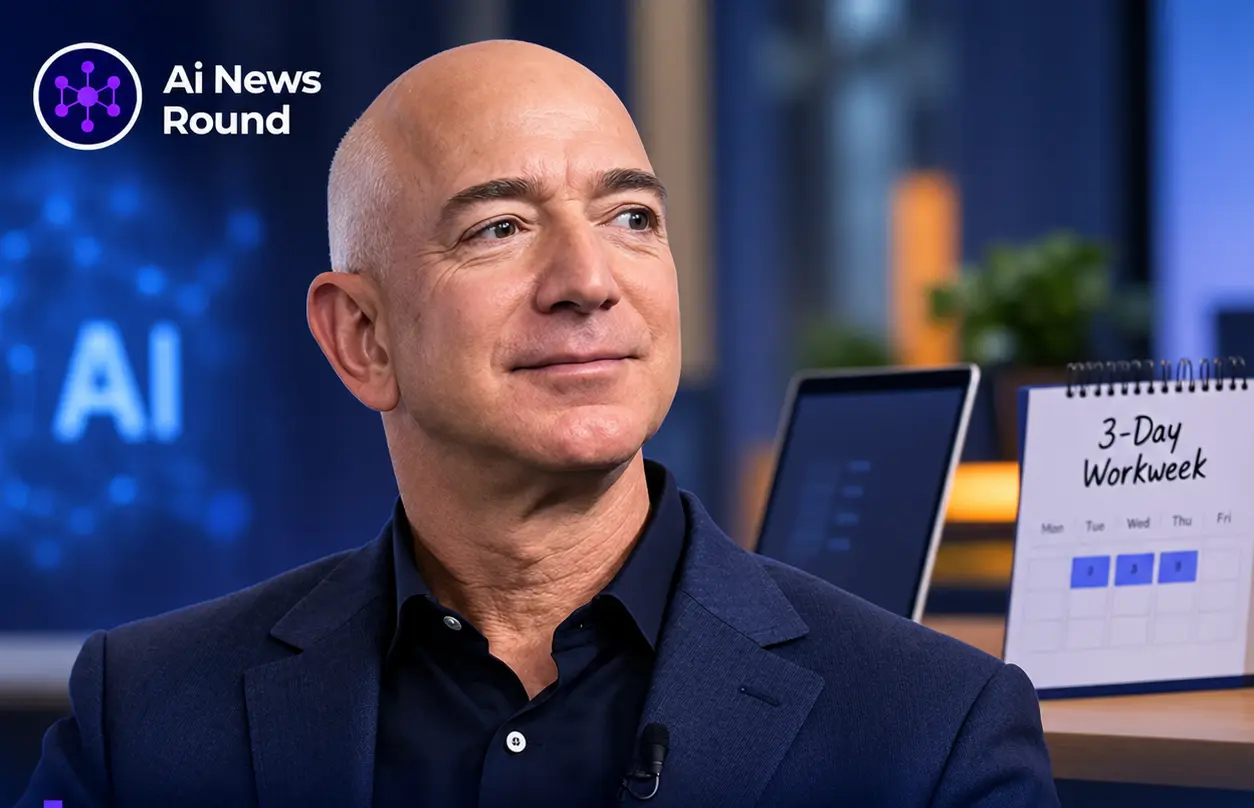
Amazon founder and executive chairman Jeff Bezos has offered an optimistic outlook on the macroeconomic impact of artificial intelligence, suggesting that AI-driven productivity gains could fundamentally reshape standard employment models. Speaking in an interview with Fox News, Bezos argued that widespread adoption of generative models and automated agent workflows could generate double-digit productivity growth across the global economy.
According to Bezos, these efficiency gains will give workers greater financial flexibility, allowing some individuals to earn sufficient income while working just three days a week. He further predicted that rising baseline productivity could make single-income households more economically viable, reducing the financial necessity for both partners in a household to maintain full-time traditional employment.
Labor Shortages vs Mass Unemployment Predictions
Bezos explicitly rejected warning narratives from other artificial intelligence leaders who predict widespread structural unemployment caused by corporate automation. Instead, he argued that economy-wide productivity surges are more likely to create localized labor shortages for employers, as workers leverage elevated output to reduce their total working hours or exit secondary jobs.
When pressed on corporate downsizing across the technology sector—including Amazon's elimination of approximately 30,000 corporate roles—Bezos defended the company's operational trajectory. He attributed Amazon's workforce reductions strictly to correcting rapid headcount expansion during the COVID-19 pandemic demand surge, rather than replacing human personnel with artificial intelligence tools.
Policy Guidance and Industrial AI Strategy
Beyond labor dynamics, Bezos addressed regulatory frameworks and hardware infrastructure for advanced artificial intelligence development. He cautioned governments against imposing blanket restrictions on underlying foundation models, advocating instead for targeted laws focused on specific harmful applications. Additionally, Bezos highlighted long-term infrastructure concepts, noting that orbital data centers managed by commercial space ventures like Blue Origin could eventually offload terrestrial energy demands from artificial intelligence workloads.
For further analysis on economic impacts and foundation model deployments, explore our coverage on OpenAI Developer Model Guide for the GPT-6 Family and view our updates under AI & Society.