Dynamic Interface Generation and Streamed Reasoning
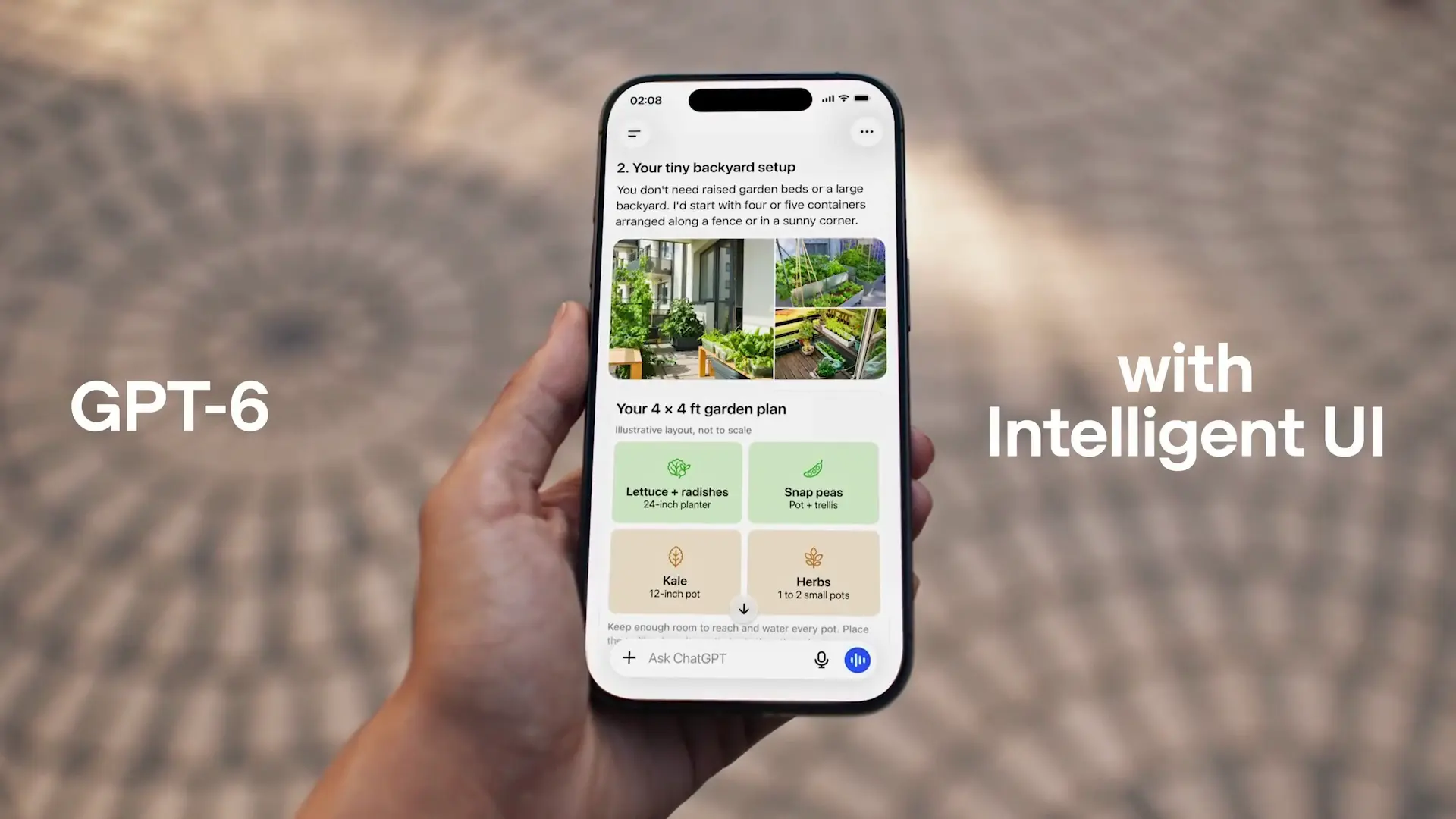
OpenAI has officially begun the global rollout of its GPT-6 model family to ChatGPT, introducing a native rendering framework called "Intelligent UI." Rather than returning static prose or standard markdown tables, the system automatically determines the optimal output format based on the prompt context. Responses can dynamically render embedded charts, tappable controls, dynamic input forms, step-by-step visual diagrams, and functional mini-applications—such as calculators or budget planners—directly inside the chat timeline.
Alongside the visual overhaul, OpenAI implemented architectural updates to reduce initial output latency. Under the new execution pipeline, GPT-6 models can begin streaming text and UI elements to the user while continuing internal chain-of-thought reasoning in the background. For queries requiring real-time web retrieval, OpenAI reports that time-to-first-token response starts are up to 44 per cent faster compared to prior generation deployments.
Tiered Distribution and Model Availability
The rollout establishes distinct model allocations across user tiers. Paid subscribers—including ChatGPT Plus, Pro, Business, and Enterprise accounts—are receiving access to the mid-tier GPT-6 Sol model tuned for conversation and complex agentic tasks. Meanwhile, access for ChatGPT Free and Go plan users begins with the high-throughput GPT-6 Luna variant.
To maintain interface clarity, users retain control over visual preferences through workspace settings, allowing them to toggle layout elements or fall back to plain-text rendering when preferred. The update brings ChatGPT's consumer experience in line with recent developer API updates while laying the groundwork for broader agentic software integration.
For further background on foundation model benchmarks and enterprise API configurations, explore our analysis of the OpenAI Developer Model Guide for the GPT-6 Family and view our ongoing reporting under Tools & Applications.